A comedy about a group of malignant narcissists who own a trashy bar in Philly called Paddy’s, “Always Sunny” was, from Day 1, offensive even for an era in which offensiveness was so ingrained in our culture that it went largely unremarked upon. George W. Bush was seven months into his second term as president. You could still smoke in most bars. If you watched cable TV past 9 p.m., you would reliably see long infomercials for direct-to-video series like “Girls Gone Wild” or “Bumfights,” both of which were somehow less offensive than “Entourage,” then considered one of the smarter shows on HBO.
You can do anything . That was just how it was then. “Always Sunny” stood out to me immediately as the greatest sendup of a time when the bad guys kept getting away with it and the ignorance of an American culture that was happy to let them. Being so young, I didn’t know at the time that this would remain an evergreen topic 20 years later. Nor did I realize that “Always Sunny” would become — as it begins its 17th season this month on FX — the longest-running live-action sitcom ever to appear on television by a fairly wide margin.
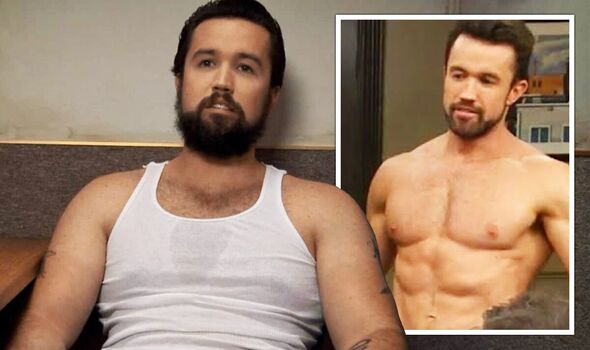
The series creator, Rob McElhenney, plays Mac, a closeted and deeply insecure man who serves, poorly and unnecessarily (because there are rarely any customers), as the bar’s bouncer. Last month, McElhenney legally changed his last name to Mac. But Charlie Day has always shared a name with his character, Charlie, the bar’s janitor, an illiterate stalker who suffers from what the DSM-5 has labeled pica, or the compulsive consumption of inedible objects, especially viscous chemicals like paint, bleach and suntan lotion. Working behind the bar are Dee (Kaitlin Olson), a failed actress with no self-worth, and her fraternal twin, Dennis (Glenn Howerton), who is the closest thing the group has to a true leader but is also a Ted Bundy-esque tyrant who keeps a kill kit in a hidden compartment in the trunk of his car. Worst of all is Dennis and Dee’s father, Frank, played against type by national treasure Danny DeVito, who is a little bit of all of the above. In his first appearance on the show, as part of a story line in which all members of the main cast fake being disabled, each for a distinctly idiotic reason, he pretends to be paraplegic in order to receive special treatment from the dancers at a strip club.
Pushing humor to uncomfortable extremes is a long sitcom tradition stretching all the way back to “I Love Lucy.” “Seinfeld” and its mantra of “no hugging, no learning” is an obvious precedent, but even George and Kramer led comparatively charmed and functional lives. “South Park” has been on television even longer than “Always Sunny,” though its humor is often an example of that which it derides — the sadism of schoolyard bullies. But a good episode of “Always Sunny” went further and was more deranged, more analytical than anything before or since. It’s as if it were written by the people who grew up the victims of all those schoolyard bullies, who had a preternatural understanding that the bullies were actually morons and stuck around long enough to watch the morons grow into losers.
For me, the show is one of the few works of art made in my lifetime that are truly cathartic. For a half-hour at a time, I get to laugh uncontrollably at the human capacity for cruelty. The reason it has worked for so long, and remains so watchable, is not just the lengths “Always Sunny” will go for a laugh but also the fact that it doesn’t glamorize the cruelty: The gang is invariably depicted as ridiculous and almost impossibly stupid. Like Mark Twain or the Three Stooges, it has never punched down. Somehow, this show in which five people are incessantly mean to one another isn’t mean itself. It’s more an indictment of meanness. “Just mean isn’t funny,” Olson said when we talked this spring. “Ever.”
Indeed, the joke’s always on the gang. Mac explained to me that his initial vision for the show was something like a Bizarro World “Friends.” “If the theme of ‘Friends’ is ‘I’ll be there for you,’” he said, “friends that will be with each other through thick and thin, no matter what the circumstances are,” then “Always Sunny” is about “the idea of friends that would never be there for each other, that would sell each other out at a moment’s notice and were always looking out for themselves well before they were looking out for anybody else.” A group of people so detestable that all they have is one another. “Because no one else will be friends with them.”
Their punishment, which is ongoing and possibly eternal, is to have to continue to exist in the world of “Always Sunny,” never changing, never growing, never experiencing much outside the parameters of one another’s selfishness and the dim lights of Paddy’s, the very center of their universe, which is less a charming dive in the tradition of “Cheers” and more, to paraphrase a restaurant critic who made a visit there in Season 4, a “nightmare in [a] putrid [expletive] hole.” If that description matches how you’ve felt about living in the United States at some point in the last 20 years, you’re probably already a dedicated viewer of “Always Sunny.”
That this show has become the defining American sitcom is obvious to its resolute fan base and probably a bit of a surprise to everyone else. We’re a culture that’s absolutely obsessed with television, and that’s nothing new, but our fixation has only grown more intense and twisted since “Always Sunny” first aired. The last 20 years have been the medium’s supposed golden age, an era when even The New York Times publishes feverish recaps of “Yellowjackets.” But “Always Sunny” has consistently been absent from the conversation about peak TV or appointment viewing or cringe comedy or whatever other development momentarily preoccupies the television-criticism industrial complex.